Improving visibility and engagement of urban farms in Stockholm
Nov 2024 – Jan 2025
Overview
This project was based on a fictional brief that Stockholm Municipality wanted to explore how a digital service could help promote urban farming among citizens for a prototyping course.
Problem
Urban farms in Stockholm struggle to attract young adults (18-35 years). There is limited awareness of urban farm locations, a lack of cultivation knowledge, while existing digital information is scattered and not engaging.
Goal
Explore how a digital solution in collaboration with Stockholm Municipality can make urban farming accessible, visible and engaging.
Solution
An app that provides urban farm locations, cultivation tutorials and a community forum to connect citizens and share tips.
To understand the potential users, I conducted two out of four qualitative interviews with the "why-why-why" method to gain insight on motivations and challenges regarding urban farming in Stockholm. Later we applied a thematic analysis through an affinity diagram on the interview findings and identified the following pain points:
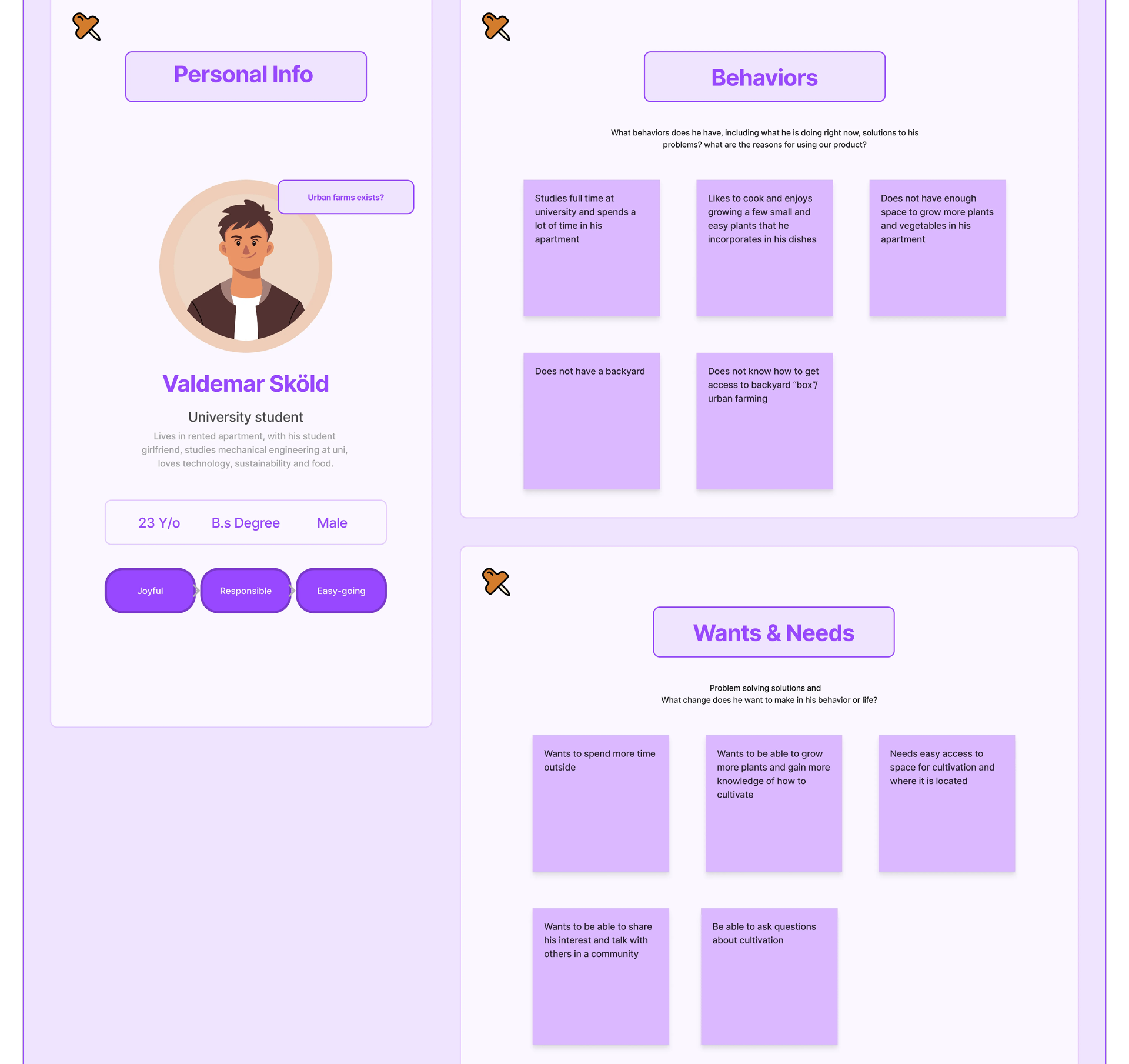
To further guide our design work based on our research, I created a persona to better understand what user requirements we were designing towards.
Persona created based on research insights
Together, the insights and persona helped us define clear design requirements: The solution needed to be informative, social and intuitive to guide users.
Ideation
To come up with solution ideas, we held a brainstorming workshop within the team. We collaboratively added post-it notes, grouped concepts, and colour-coded them based on potential value and feasibility. This process helped us define potential functions for an app.
DEFINE & DEVELOP
Prototyping
Storyboard
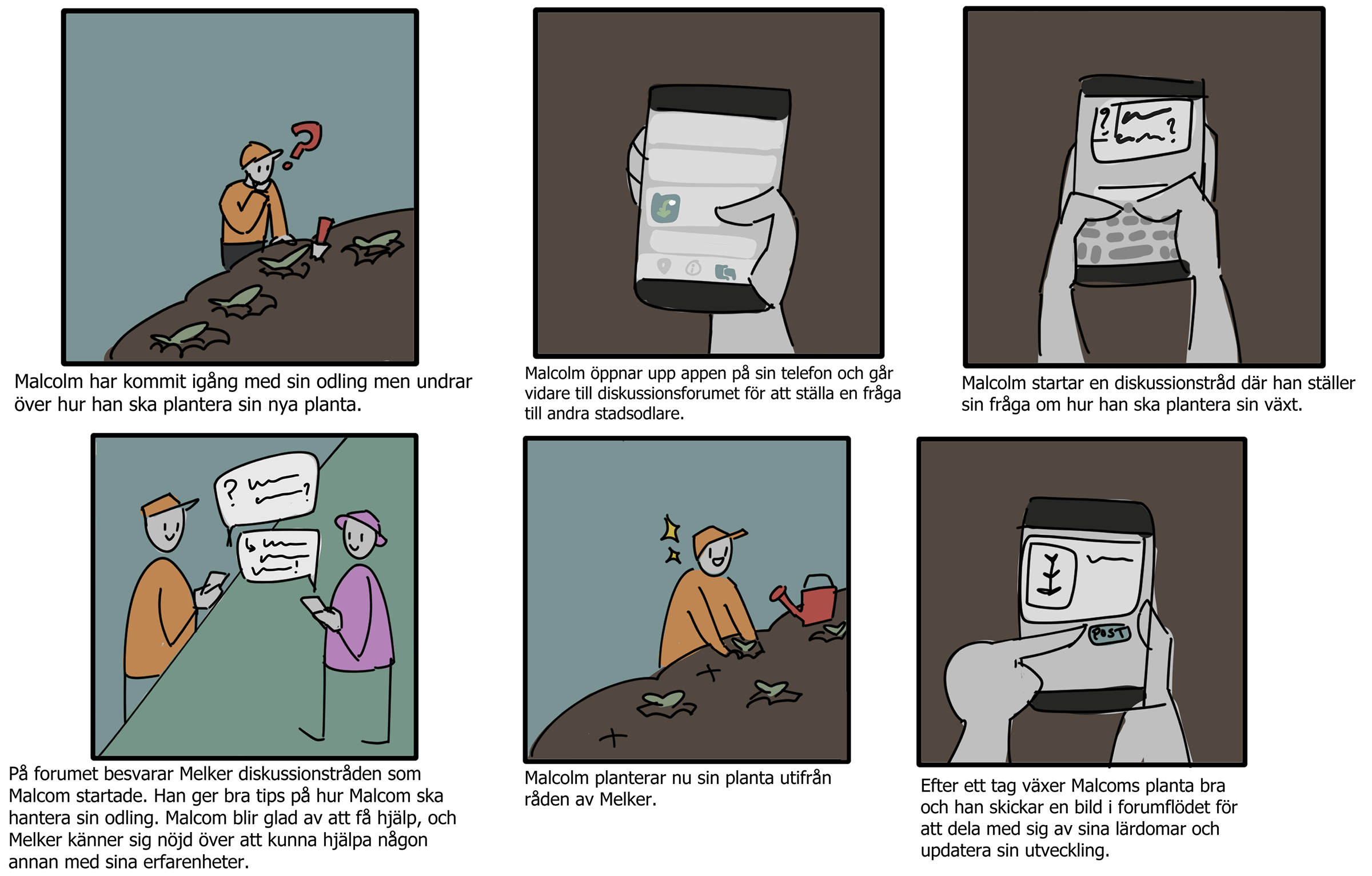
In the team we individually created storyboards to better communicate and understand our ideas on what role the app would play in one or more use case scenarios.
My storyboard illustrated a use-case scenario for using a forum for urban farms
Rapid paper prototyping
By presenting our storyboards to the stakeholders, they gave us feedback for iteration to continue with farm locations.
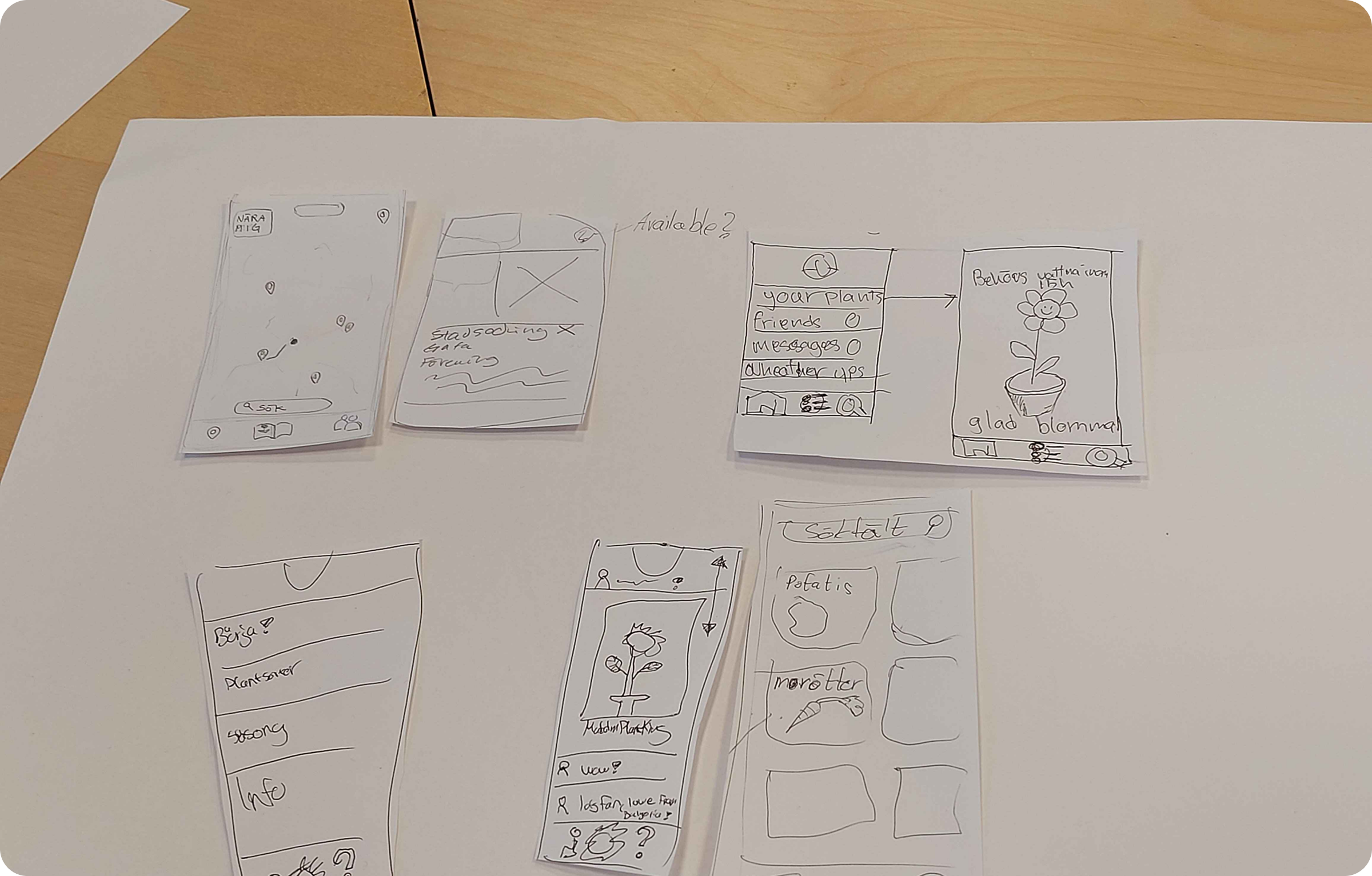
We continued with rapid paper wireframes of functions they wanted and the layout of the app on paper, to rapidly explore and iterate on different ideas.
I designed the map functions with icons to indicate farm location and information (top left), because users had expressed they wanted the app to help them locate farms.
Result of our rapid wireframe prototyping session
Wireframes
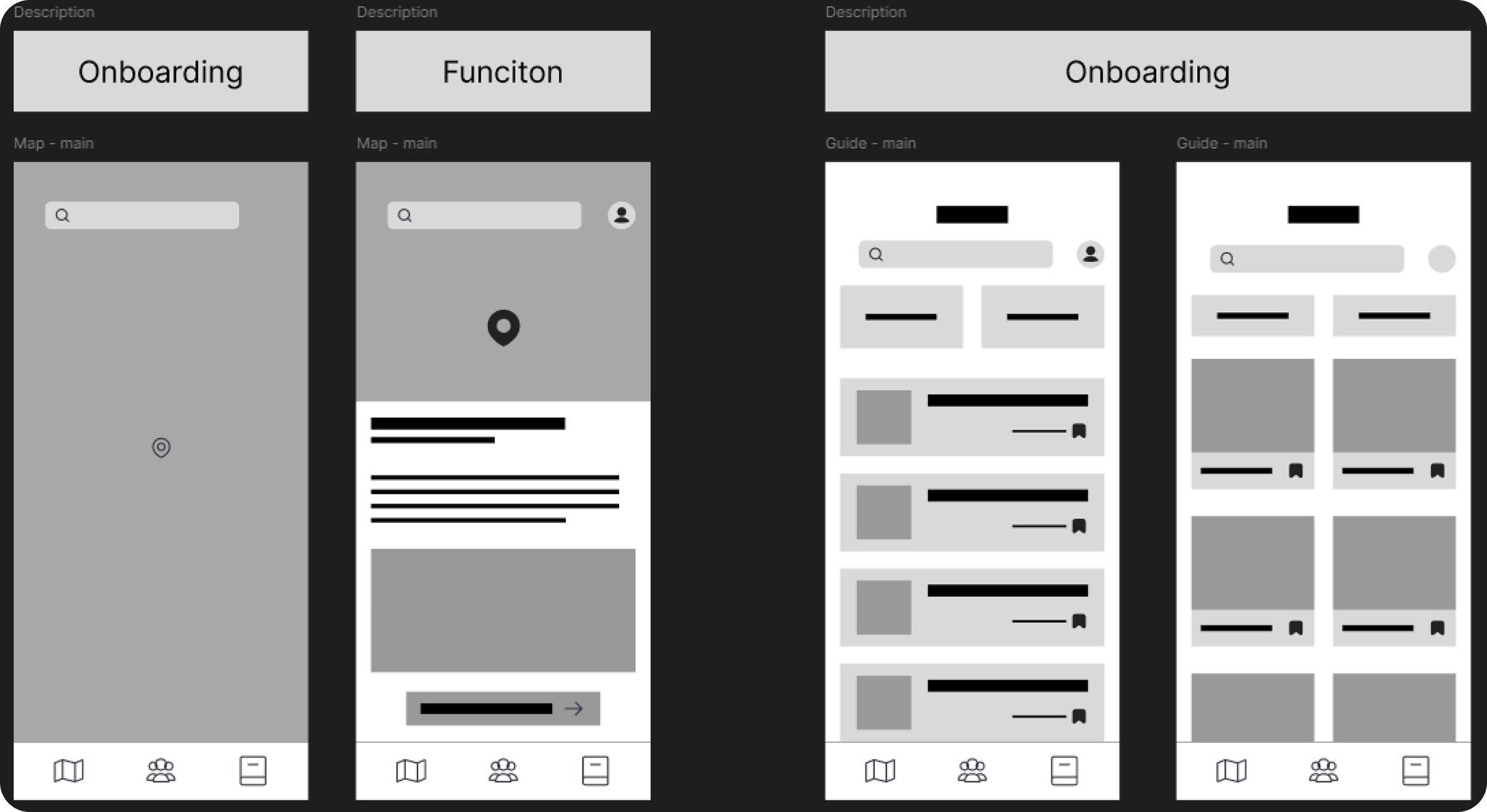
After ideating and evaluating different options we created digital wireframes in Figma.
My wireframe contribution focused on onboarding and the tutorial page where my goal was to create an intuitive taskflow and information architecture with important functions one or two click away.
My wireframe sketches
By presenting our prototypes and wireframes to users, we used their feedback to guide several iterations for refining hierarchy and layout of the app for the final prototype.
Deliver
Final Prototype
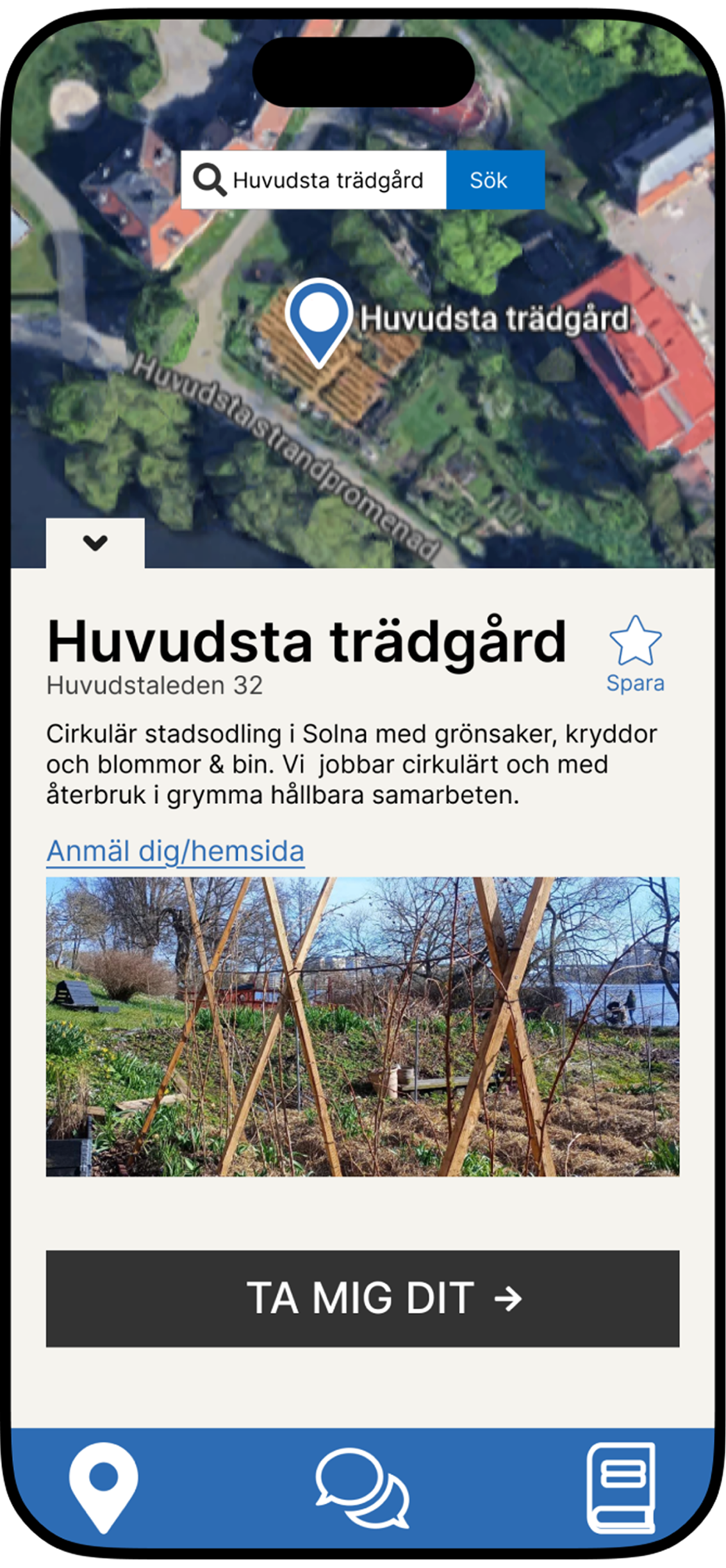
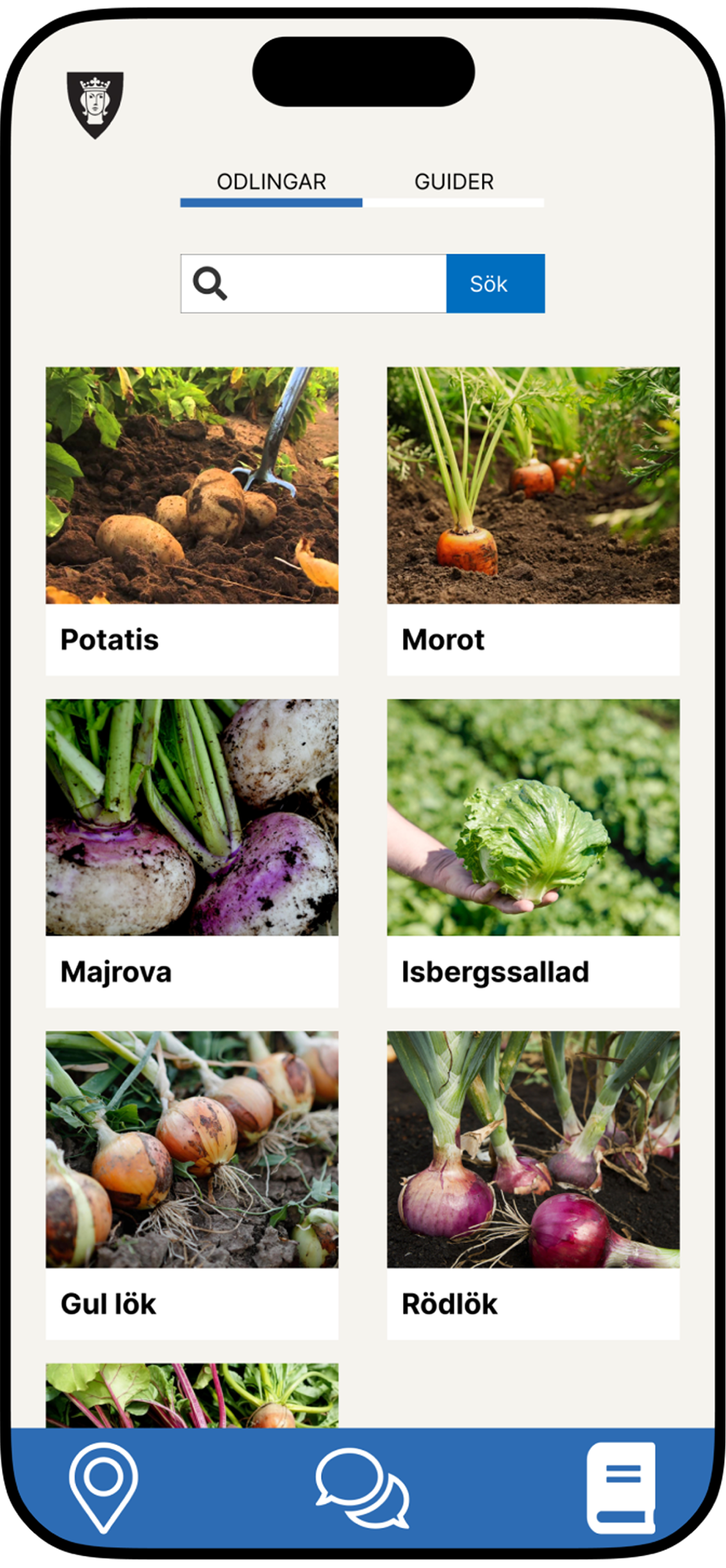
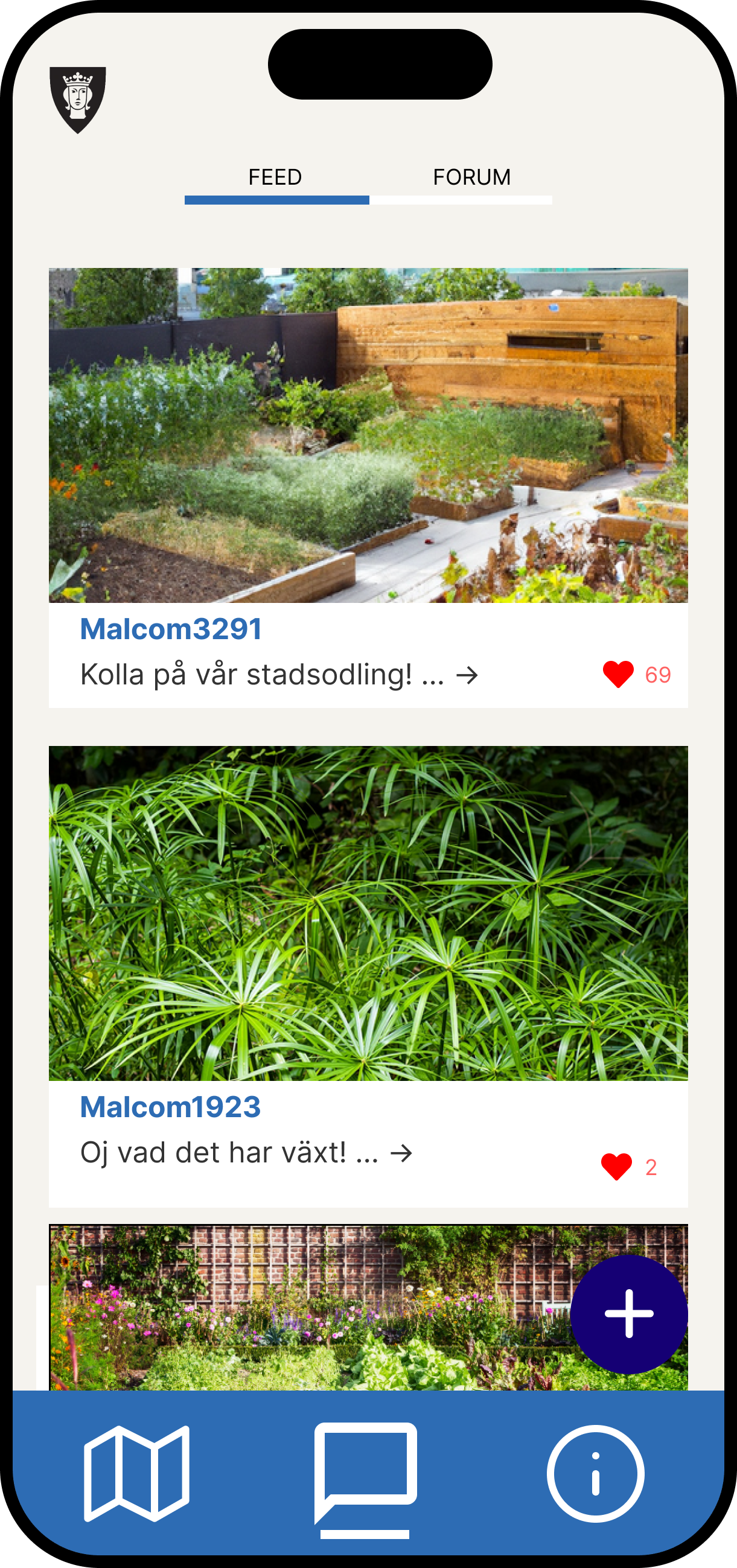
The final prototype was developed in Figma based on wireframes and interview data, with the core features: locating farms in the Stockholm region, learning cultivation techniques, and connecting with the urban farming community.
We also created a design profile inspired by and for Stockholms Stad, to make the app credible by using logos, shapes and key colors.
Final prototype views
Conclusion
Project outcome
The project resulted in a deliverable, interactive Figma prototype as well as a suggested concept on how to tackle the problem of limited awareness of urban farm locations, cultivation knowledge and scattered information for the target group of young adults.
Learnings
With practical semi-structured interviews I got to learn how to conduct interviews for user research, translating findings into requirements that can guide the design process along with new methods added to my methodbank.
I think however, we were too quick to assume without the data from users because of the limited circumstances. This meant we comimtted to certain directions earlier in the process, before exploring other options that might have better supported users.
If I had more time...
Test final prototype with participants
Conduct a competitive analysis to better understand existing digital solutions and make the app more unique
Refine the UI to better align with modern design systems, WCAG guidelines and design profile as a governmental project
Final reflection
Overall, the project reinforced the importance of grounding design decisions in user insights while maintaining iteration for feedback to build a solution that aligns with user needs.